
A quick recap of Part 1 of our Iceland Road Trip: our first 2 days in were jam packed with exploring. We had ticked off the Golden Circle, having visited Thingvellir National Park, snorkelled in the Silfra Fissure, stood in awe of the Bruarfoss waterfall, and got freaked out by the Strokkur Geysir. Next up in Part 2 is just our ‘Day 3’ adventure! It was so full of beautiful and staggering sights that it simply had to have its own dedicated post.
Day 3: The Journey to Vik
We were treated to particularly crappy weather on day 3 of the road trip, so the 2-hour drive from the Haukadalur geothermal area to Vik was wet and the scenery covered in dense fog. It was my turn to drive and it took me a few kilometres to get used to being on the opposite side of the car and road (reminder: we lived in Australia). I tried to employ the tactic of talking my next actions out loud, which proved to be a failure when accidently turning onto the wrong side of the road at a few major intersections. It took a while to stop internally screaming whenever there was oncoming traffic.
We had a couple of waterfalls earmarked to visit along the way, but first we stopped off in Hvolsvollur at the Lava Centre.
Lava Centre
In the months leading up to the trip we closely watched the fissure eruption taking place in the Reykjanes peninsula, with regular messages from Mum questioning whether it was safe for us to go. We had all also heard about different eruptions in Iceland over the years causing chaos with flight cancellations (more on this later).
The Lava Centre really helped me understand and put into perspective the scale of devastation from past volcanic activity, and the potential magnitude of closely monitored pending eruptions. The interactive exhibit showcased detailed maps of volcanos scattered across the country and revealed how the millions of years of activity had changed the landscape.
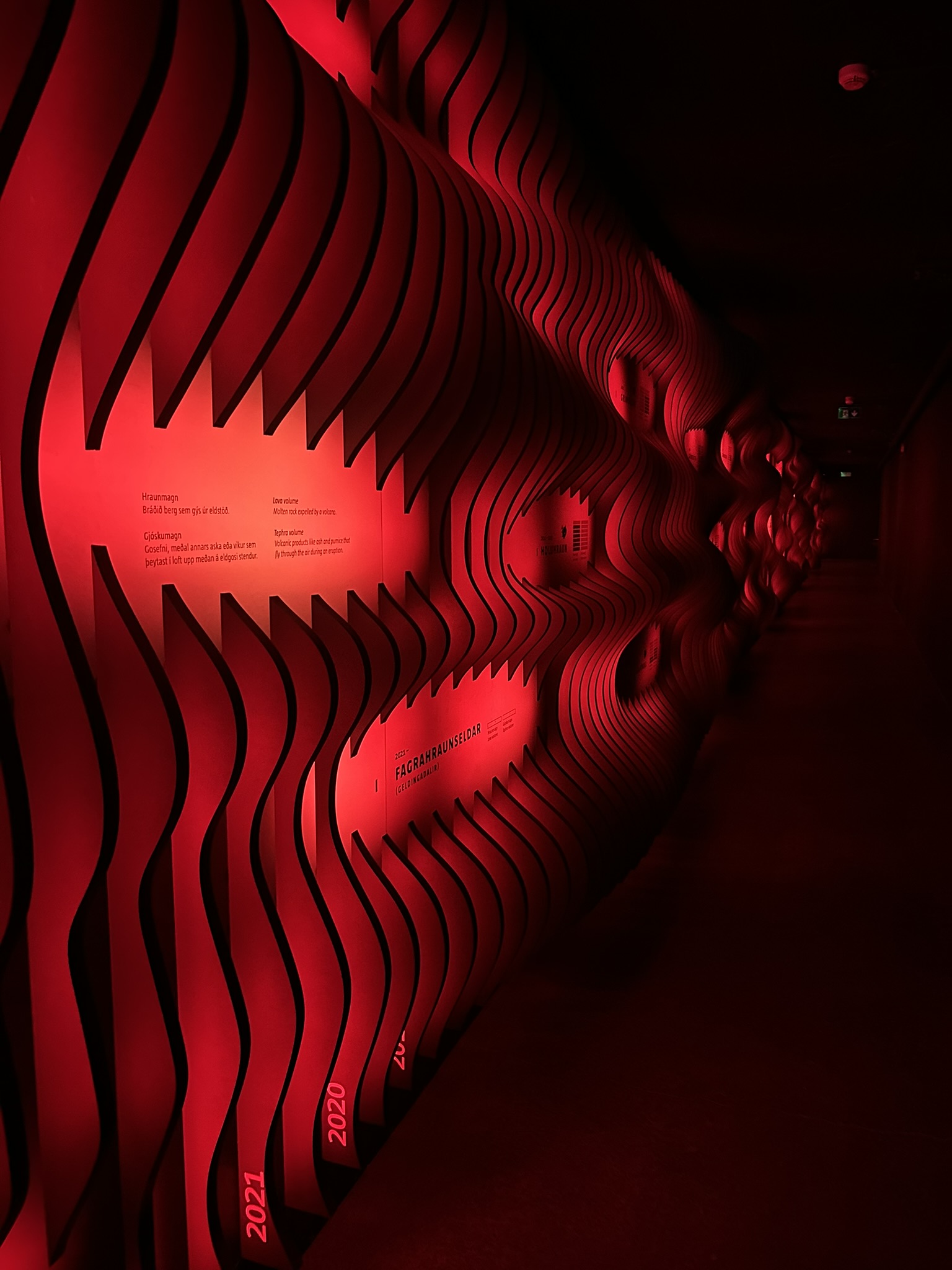
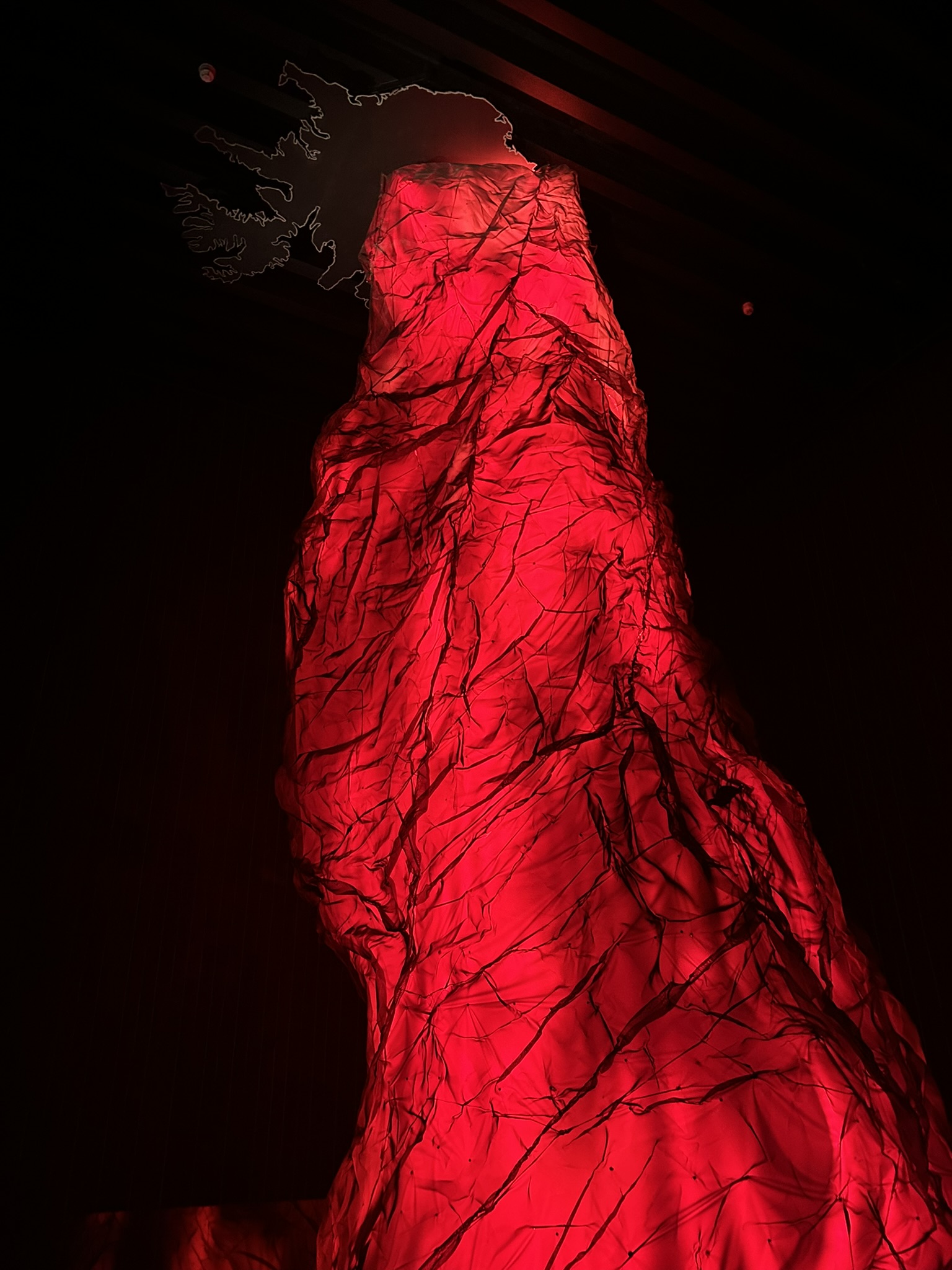
Being from Australia where these kinds of events are non-existent, I found the Lava Centre to be very interesting and well worth the stop. What stood out and impacted me the most was what I learned about the nearby menacing Katla Volcano, which in their words is “overdue for its next major eruption”. Learn more about this ‘impact’ in Part 3 of our road trip.
Seljalandsfoss
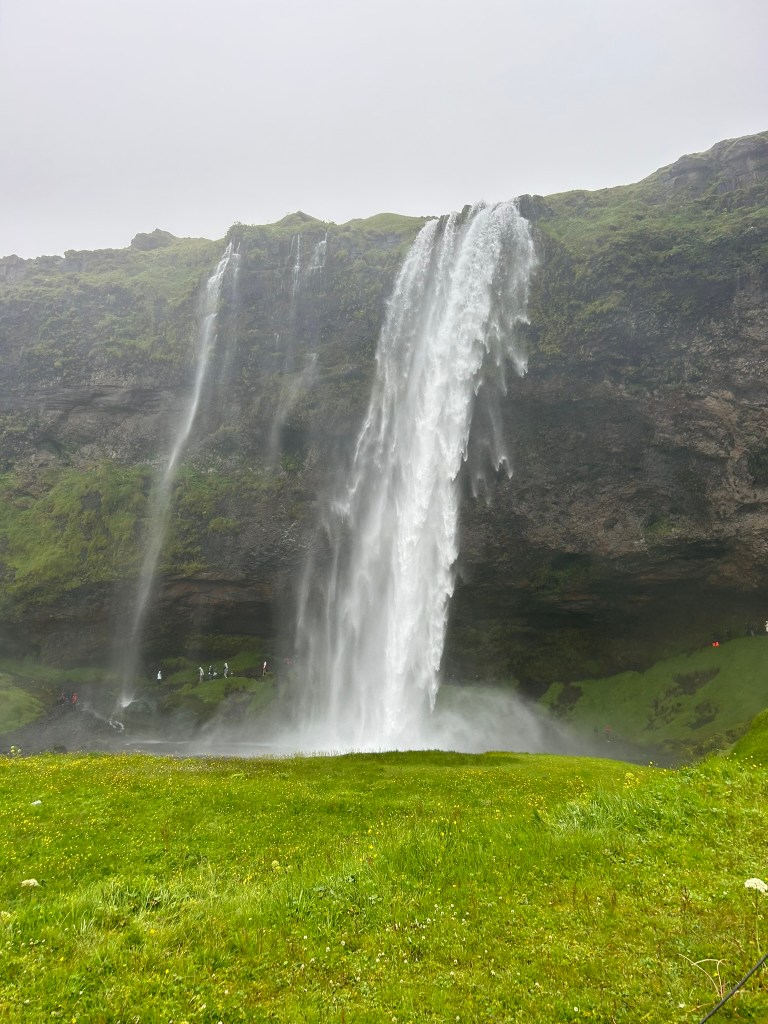
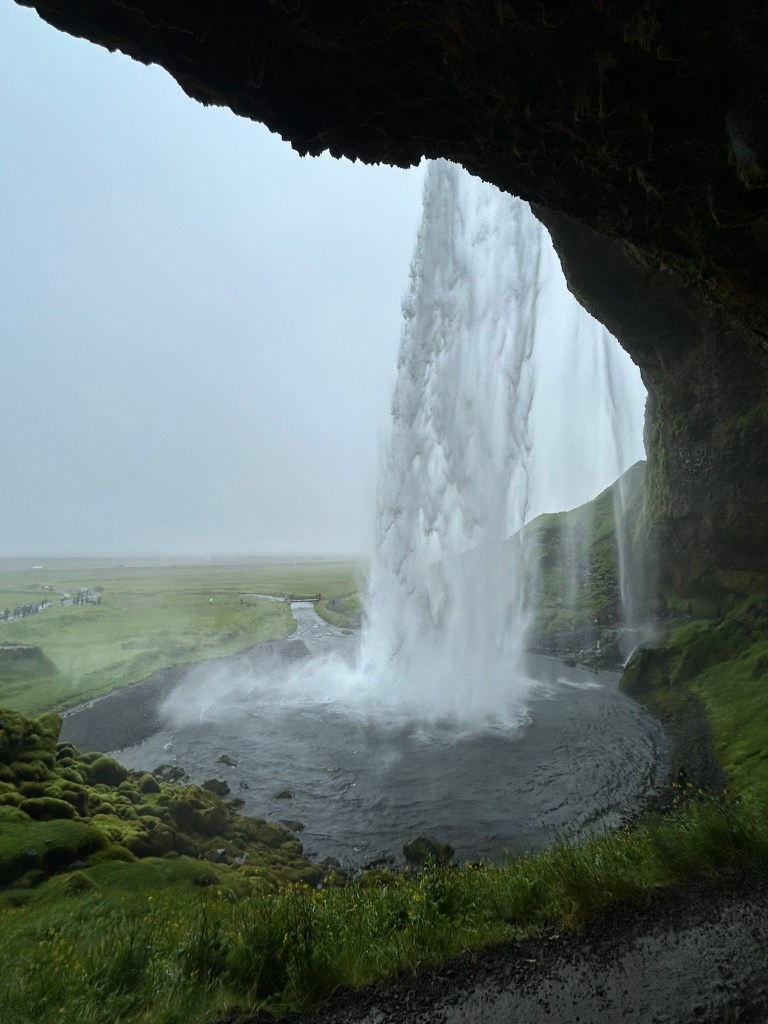
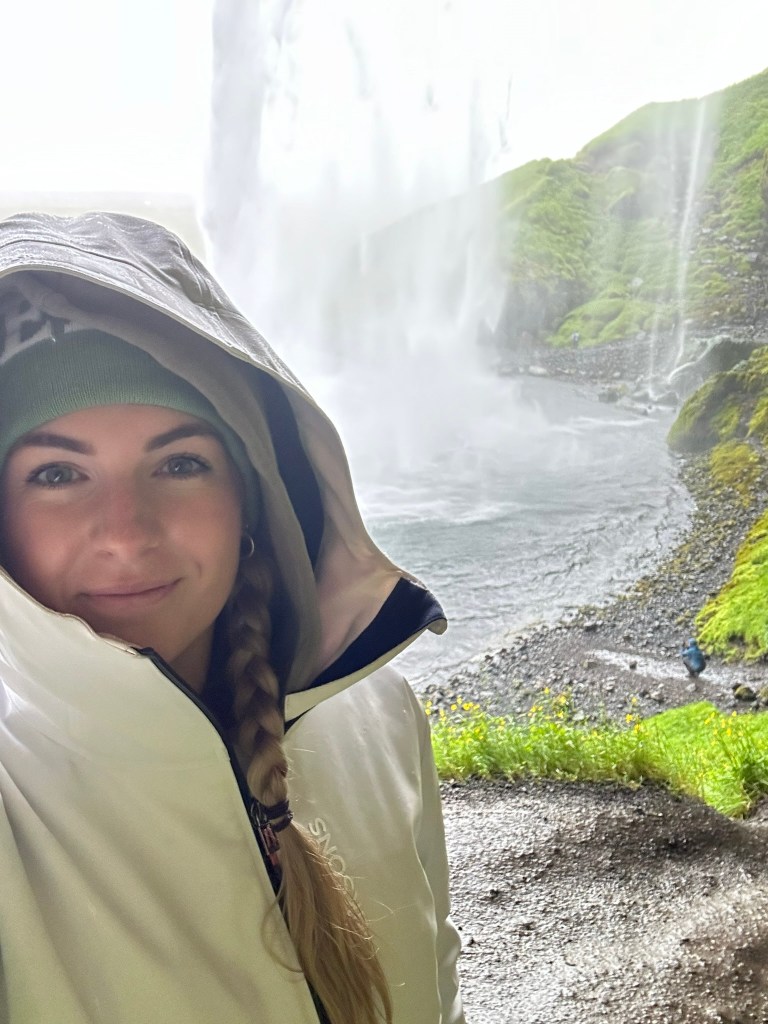
Our first waterfall stop was Seljalandsfoss. Dropping from a 60-metre height, the water flows from the Seljalands River which originates from the Eyjafjallajokull Glacier.
Fun fact: the volcano beneath the glacier ice cap famously erupted in 2010 and caused havoc across Europe, ejecting 250million cubic metres of ash plume and causing 20 countries to close their airspace.
Gljufrabui
Located a short walk from Seljalandsfoss is Gljufraubui, or the Canyon Dweller. With the 40-metre tall waterfall hidden behind cliff faces that face toward the Atlantic Ocean, to see it you have to wade up a stream and walk through a narrow crevice in the rock. Walking into the canyon and seeing the majestic waterfall surrounded by moss covered rock took my breath away, although that may have been a result of the huge amount of spray being thrown at my face (tip: wear no makeup or waterproof mascara if you want to avoid resembling a clown).
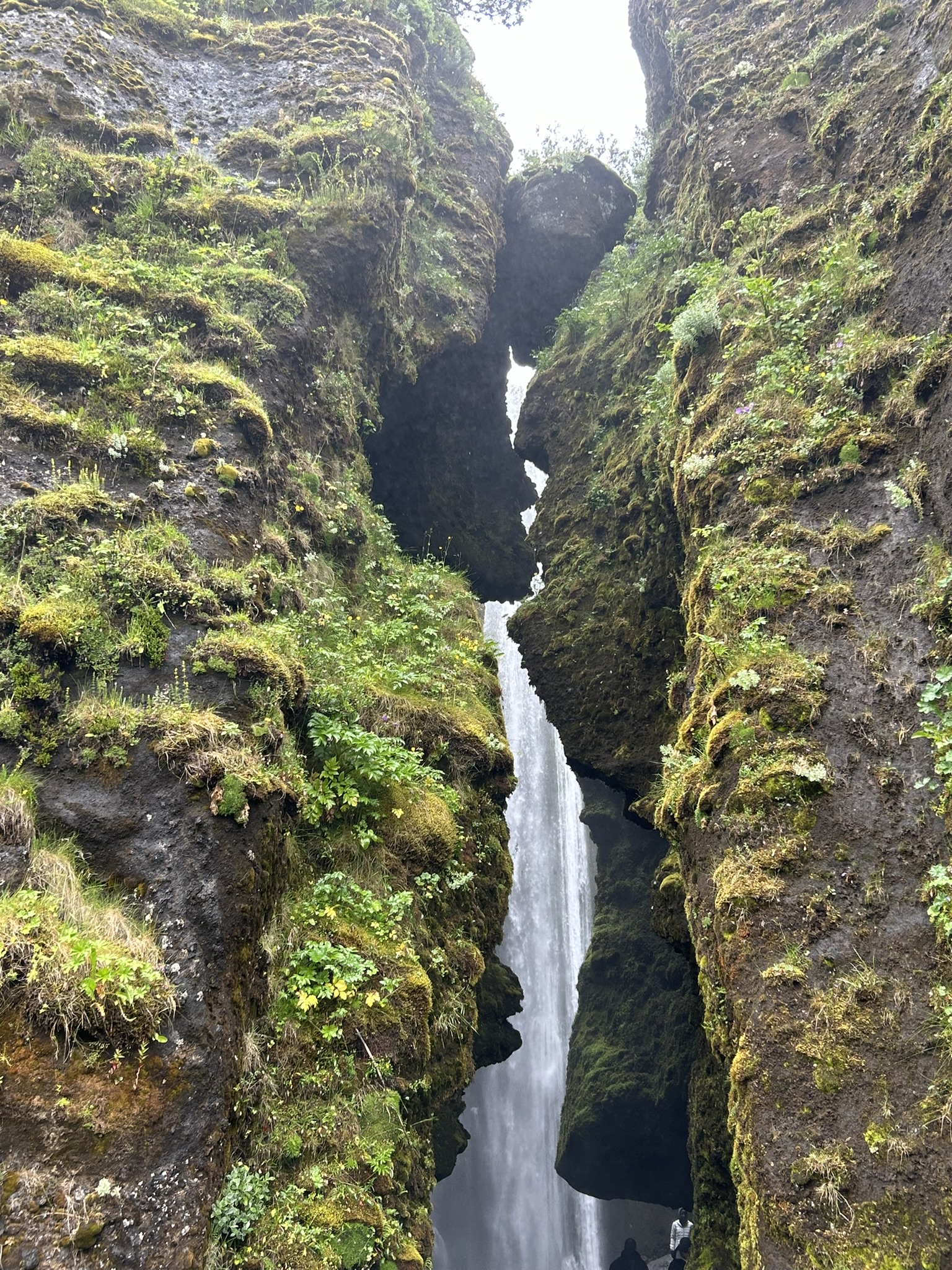
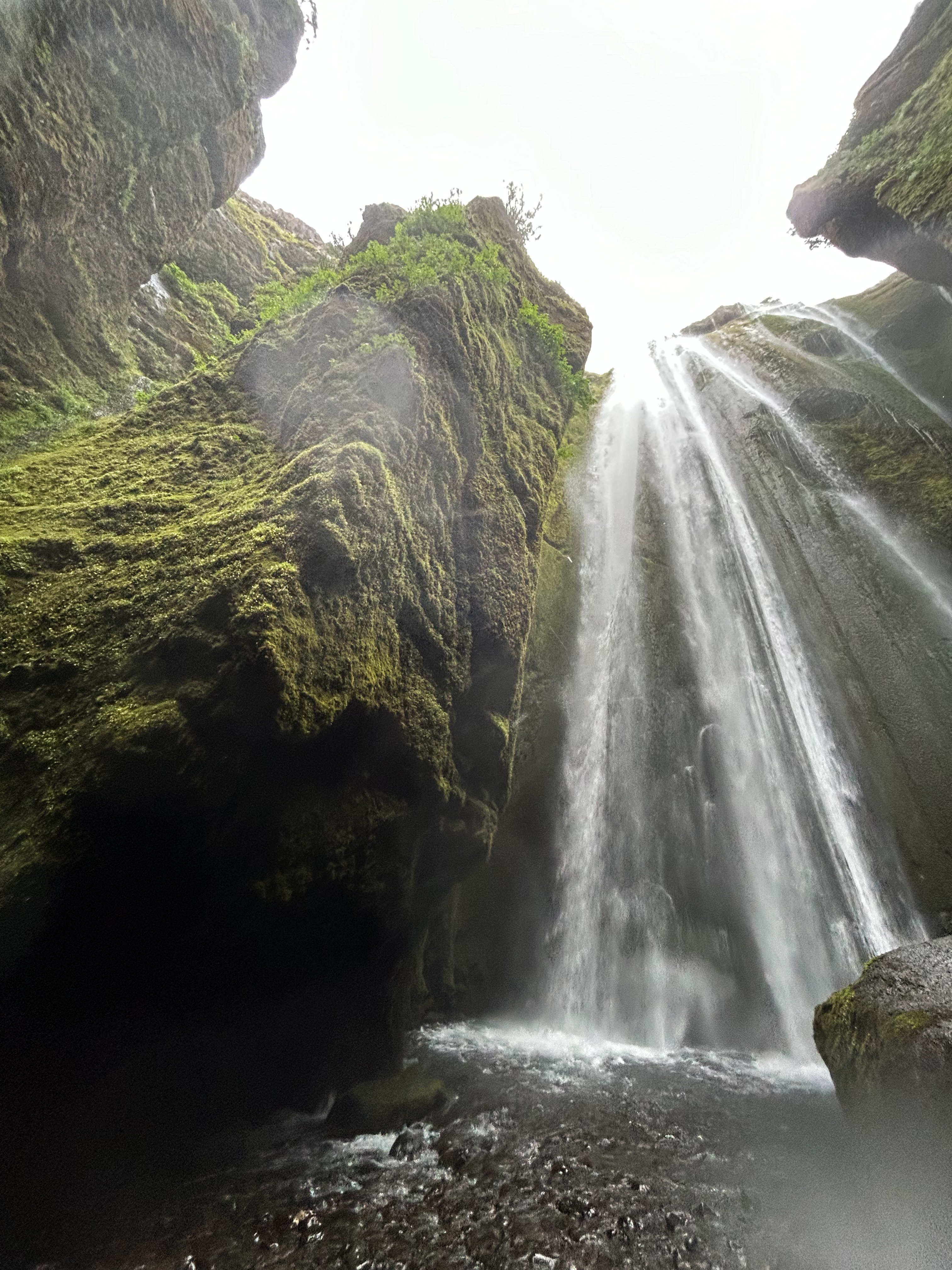
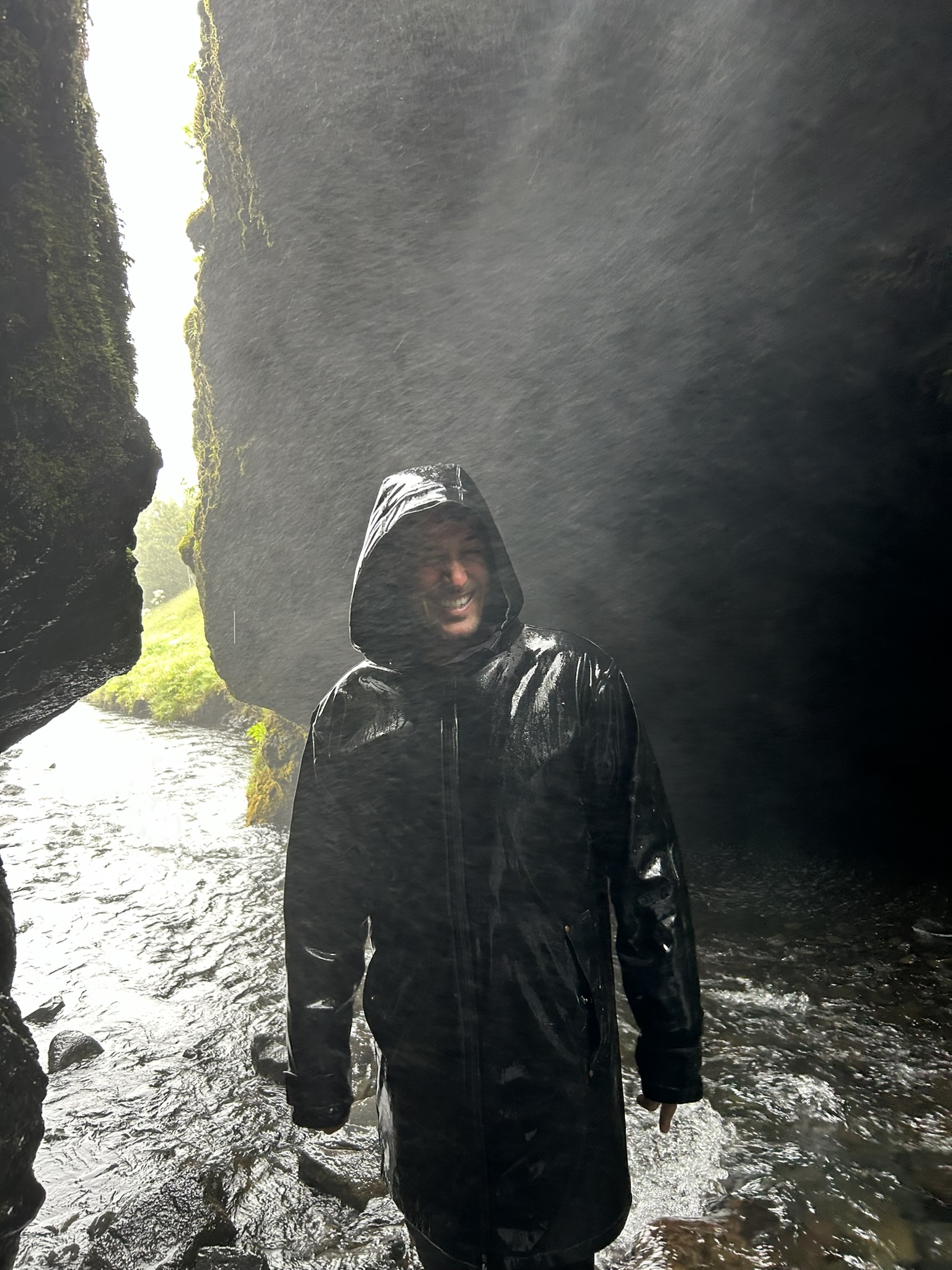
Gljufrabui was my favourite of all the waterfalls we visited, and that’s saying something because Iceland has a lot to choose from. The cavern itself was amazing, but even peeking at the waterfall through the crevice in the cliffs makes you feel like you’re exploring a lost world.
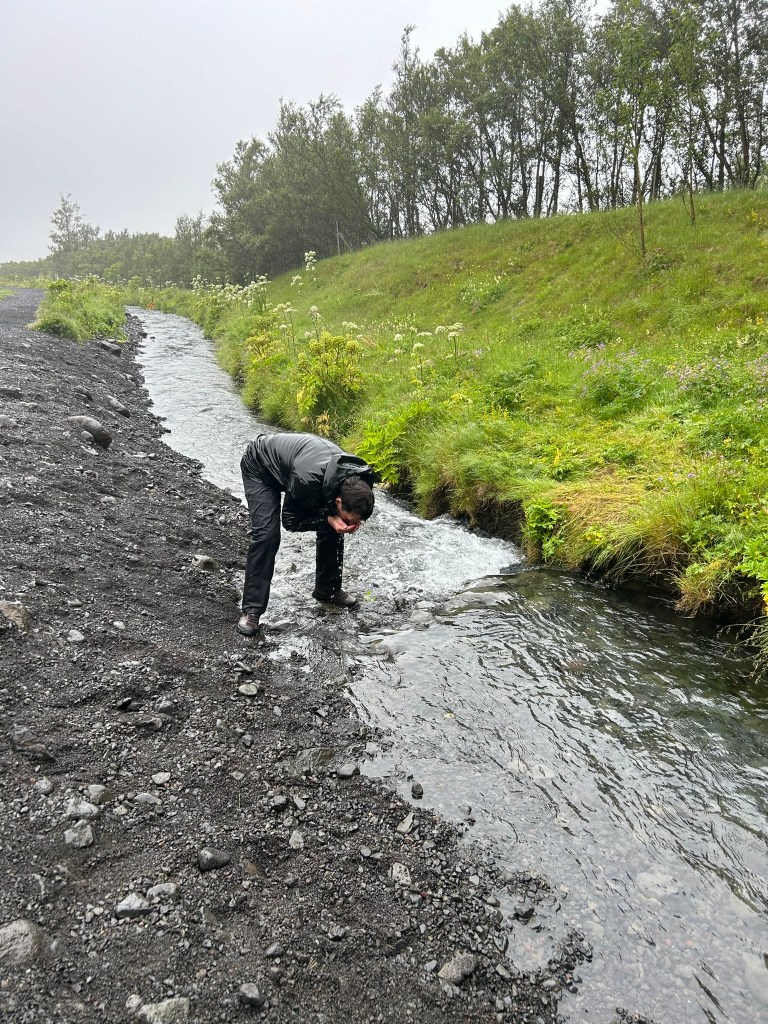
Since the water falling over Gljufraubui is also glacial run off, Ross enjoyed a quick water break before we headed onto the next stop.
Skogafoss
Our final waterfall stop of the day was at the famous Skogafoss. Fed by the Skoga River, the cliffs mark the former coastline, and with a span of hundreds of kilometres it defines the border between the coastal lowlands and the highlands of Iceland.
You can’t see the waterfall from the car park, but you certainly can hear it. Skogafoss is one of the largest waterfalls in the country with a flow rate of 1000 cubic meters per second during spring. Walking along the trail the noise grew louder and louder with every step, and my excitement along with it. Seeing the waterfall for the first time my mind was blown at the sheer volume of water tumbling over the falls.
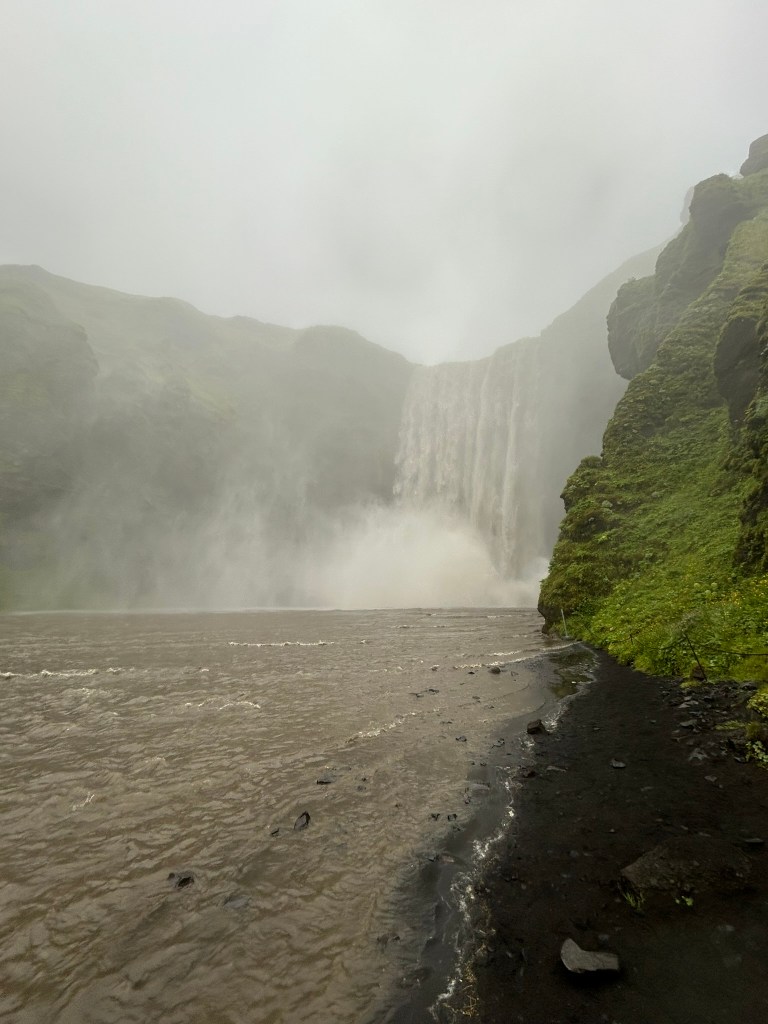
Fun Fact: according to legend, the first Viking settler in the area buried treasure in a cave behind the waterfall. The legend continues that locals found the chest years later, however were only able to touch the ring handles on the side of the chest before it disappeared into thin air. The ring was allegedly given to the local church and turned into a door handle, and now the old ring is in the Skogar Museum.
Reynisfjara Black Sand Beach
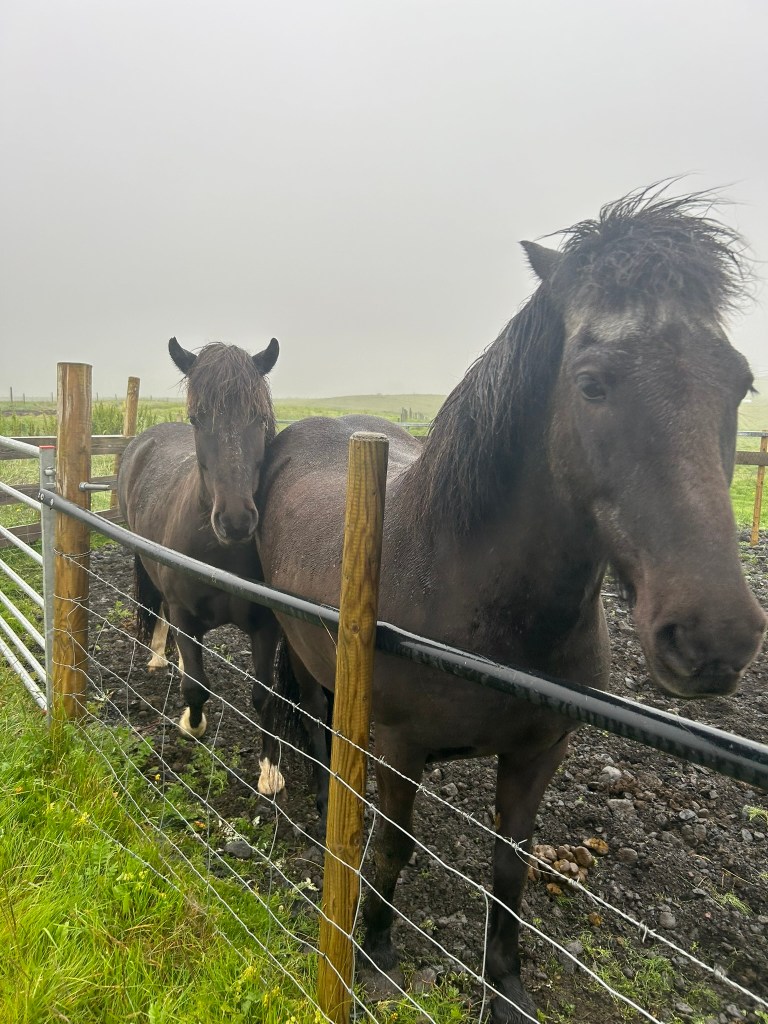
Upon checking into our accommodation at Hvammbol Guesthouse, located a short 10 minute drive from Vik, we were pleased to see that my bag had been delivered by Icelandic Air (refer to Part 1 for that story). The guesthouse accommodation was a small, self-contained cabin which had views of the Atlantic Ocean and horses which we watched galloping in the paddocks.
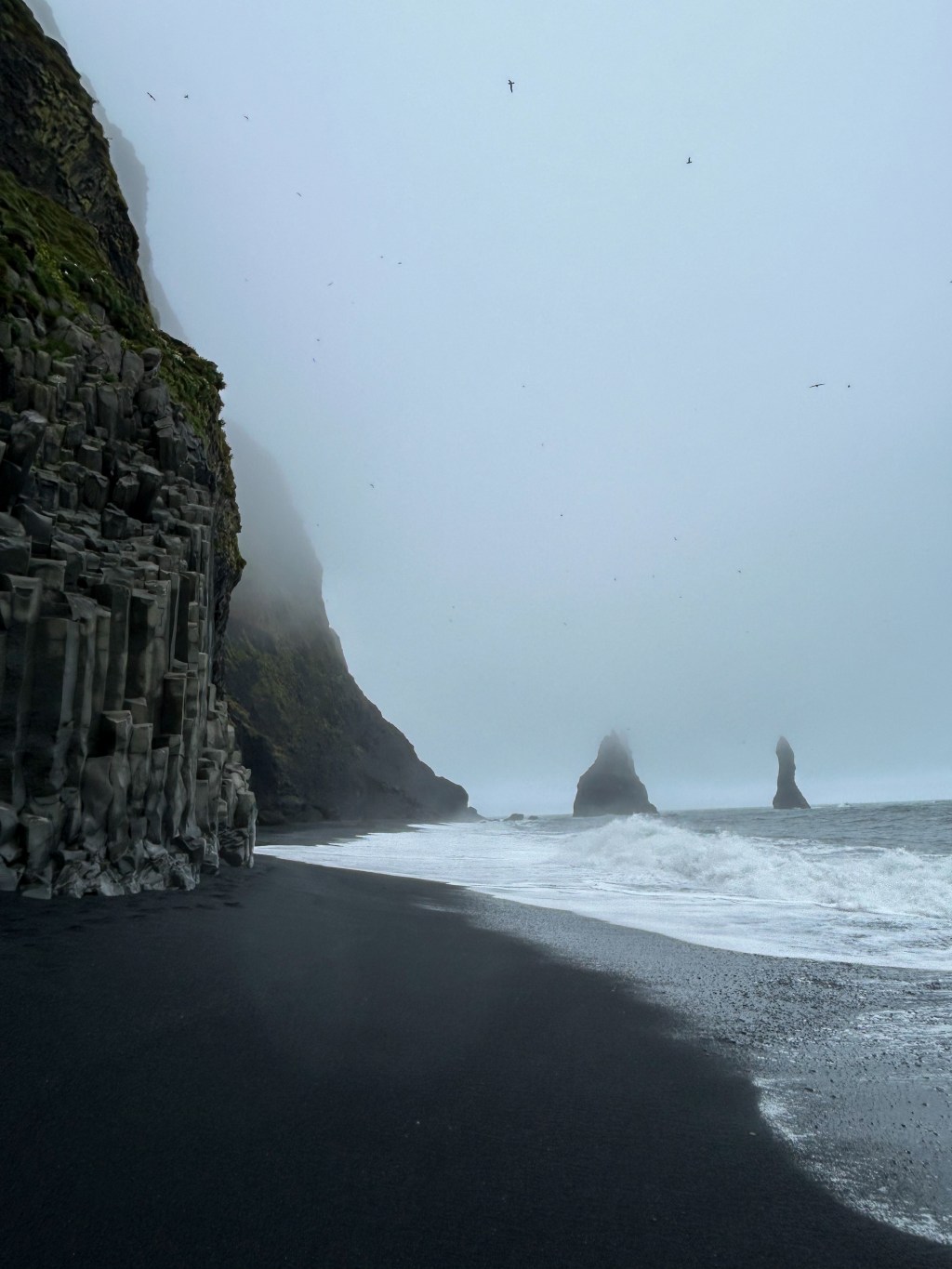
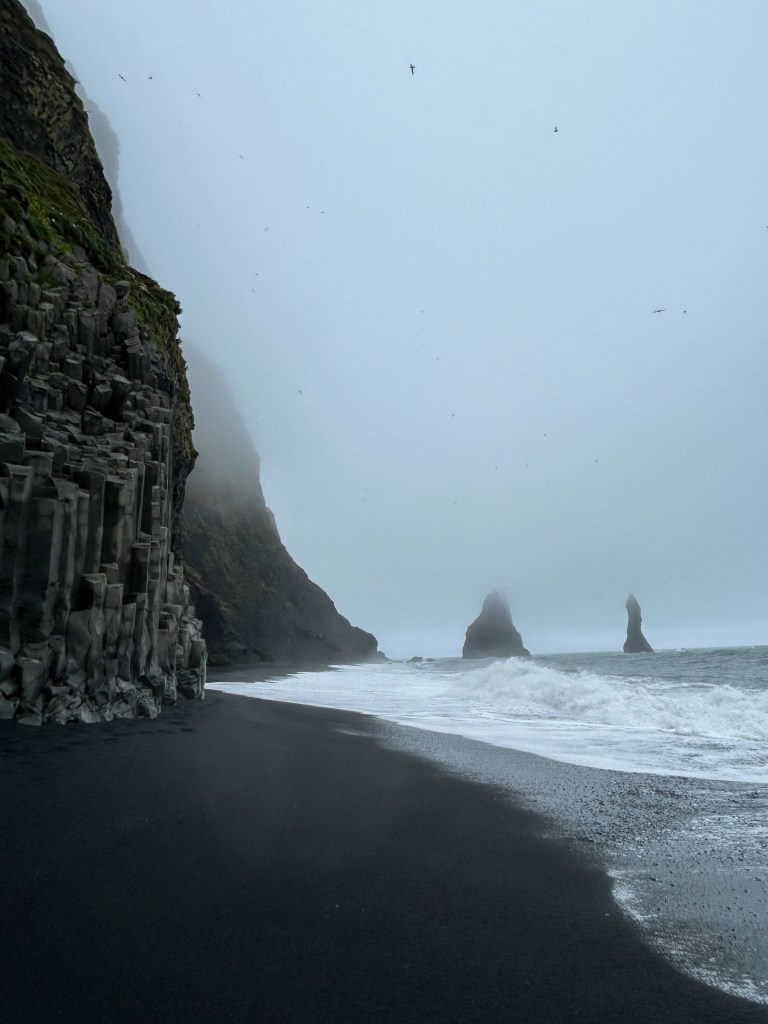
Before heading into Vik to grab dinner, we stopped at the famous Reynisfjara Black Sand Beach. Being another of Iceland’s most popular spots, there were hundreds of people in the cliffside cave taking photos of the basalt columns. To get away from the crowds, we walked down the beach a little where it was quiet, and from that viewpoint we could really appreciate and take in the amazing views.

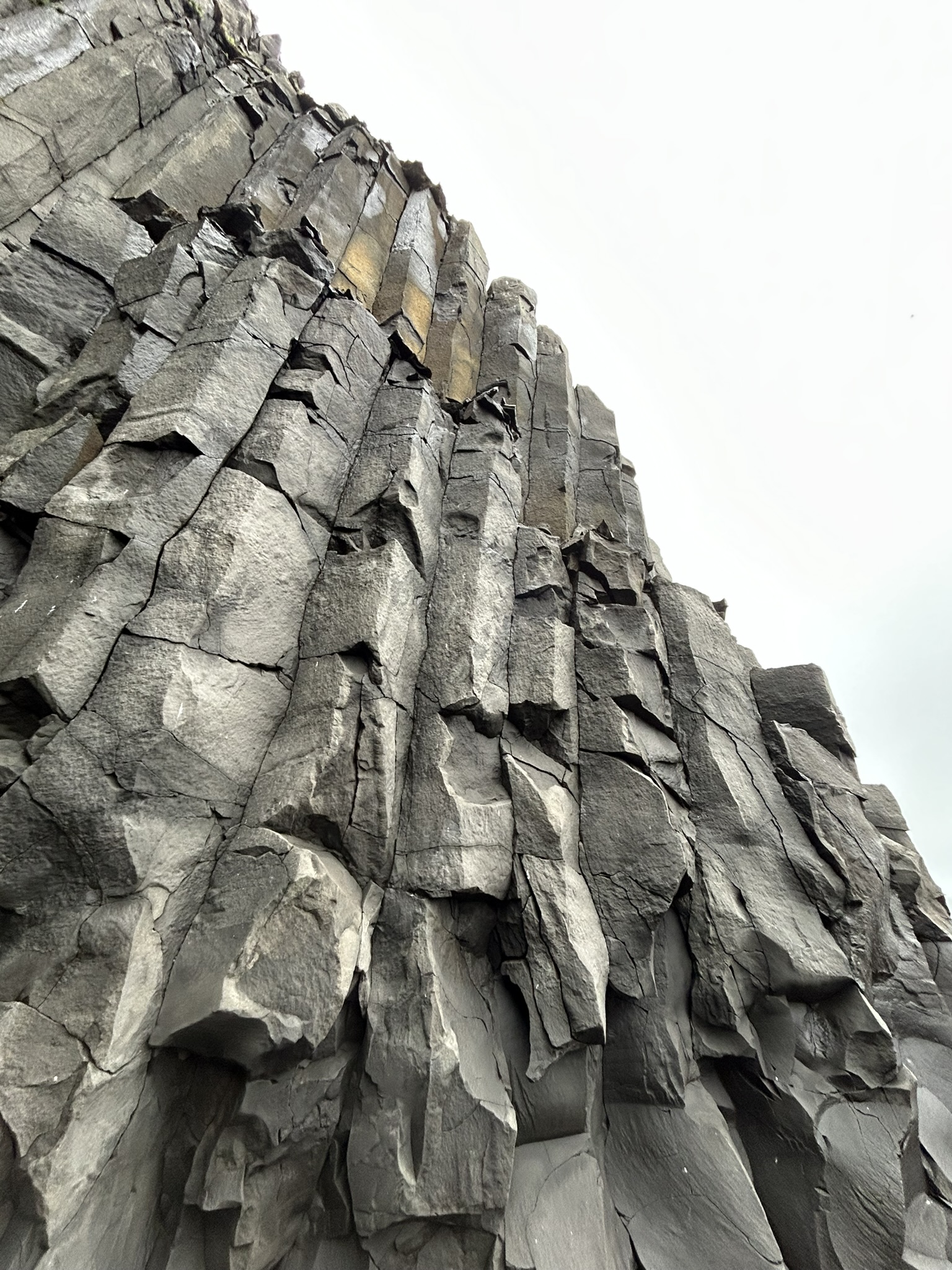
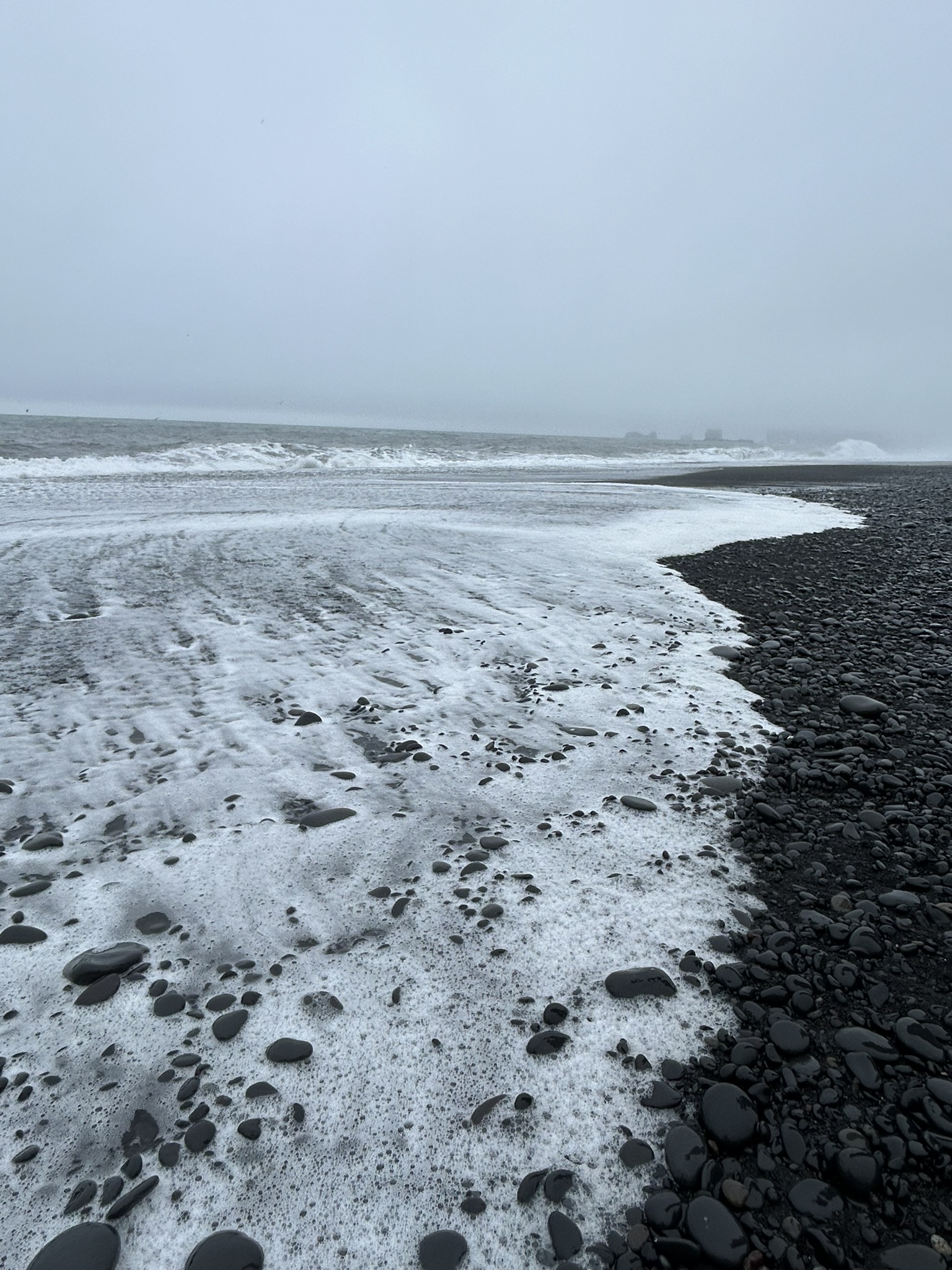
At home our beaches feature soft yellow sand and blue water under bright skies. They are a stark contrast to Reynisfjara, but I would argue it is even more beautiful. With its jet-black pebbled sand and turbulent dark blue ocean waves, the moody scene (which threw me back to my emo days and prompted Miss You by Blink-182 to start playing in my head) was complete with an eerie fog covering the top of the mountains.
One of the main reasons we wanted to visit Reynisfjara was to see the Puffins! Having migrated from across the North Atlantic Ocean, the Puffins were in town to nest. It was nothing but pure joy watching them launch off the cliffs to fish, but also hilarious to see their awkward and clumsy landings (something I can relate to) when coming back. I must admit I was a little nervous watching and hoping they would stick the landing and not crash into their own nests. Thankfully they did every time, but they definitely lost points for lack of grace.

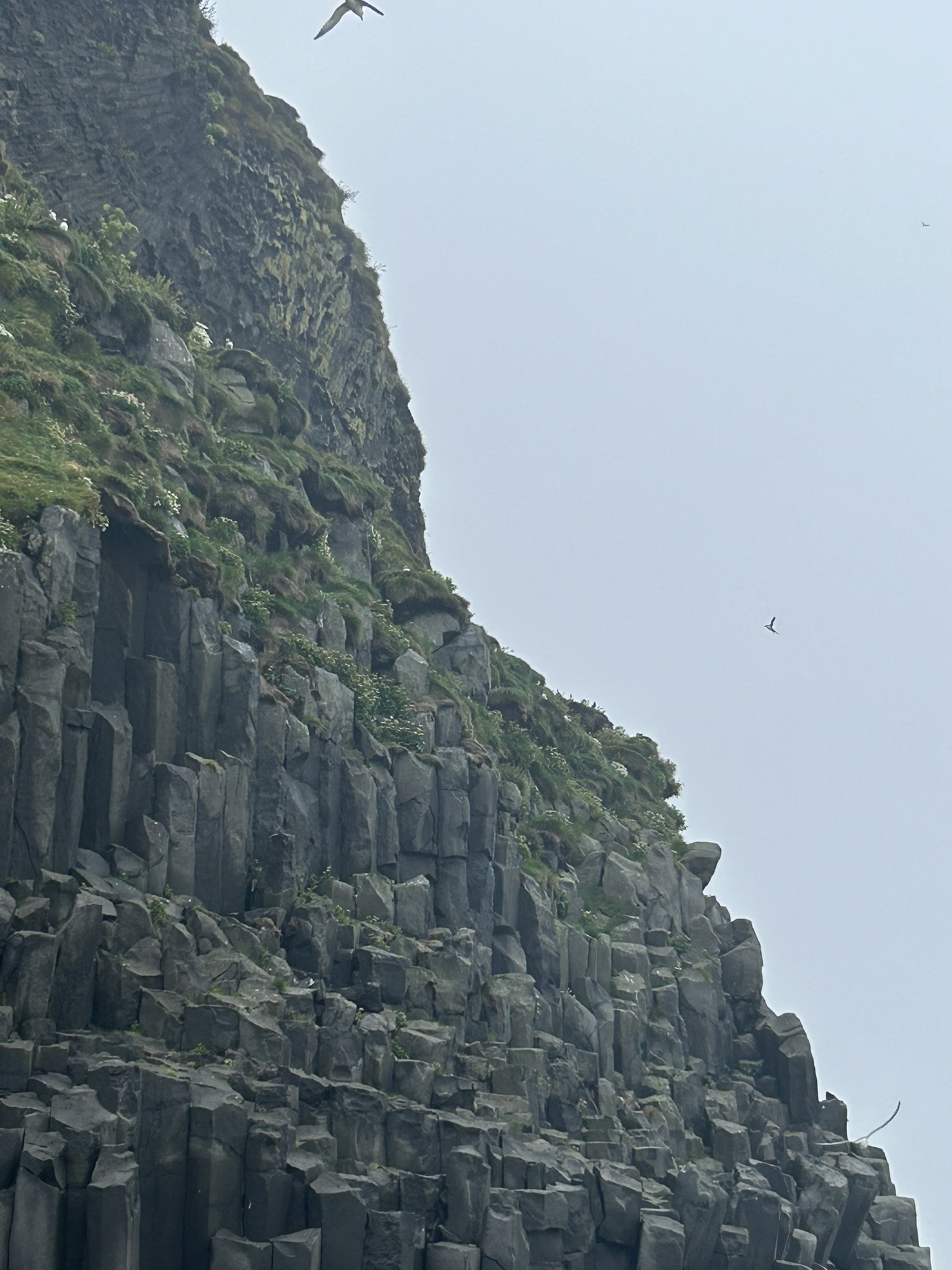
My happiness in this moment, and general likeness to their lack of elegance, led to Ross giving me the sickeningly adorable nickname of Puffin. However, since coming home he has stopped so let’s see if me mentioning it now is a not-so-subtle reminder to bring it back.
Anyway, walking back to the main part of the beach Ross spotted a seal casually surfing in the waves, watching the tourists from a far. The more we walked and watched the birds circling above, the more we noticed all the different species and got caught up in admiring it all, so it was our stomachs that made us realise how much time had past and that it was time to head to dinner in Vik.

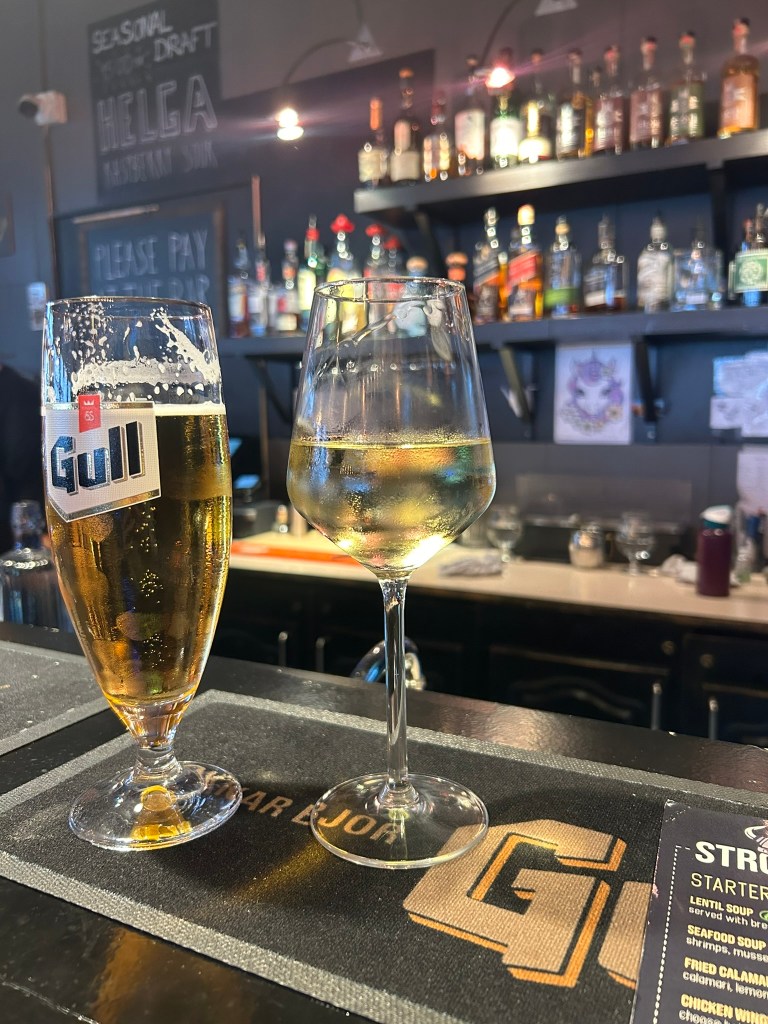
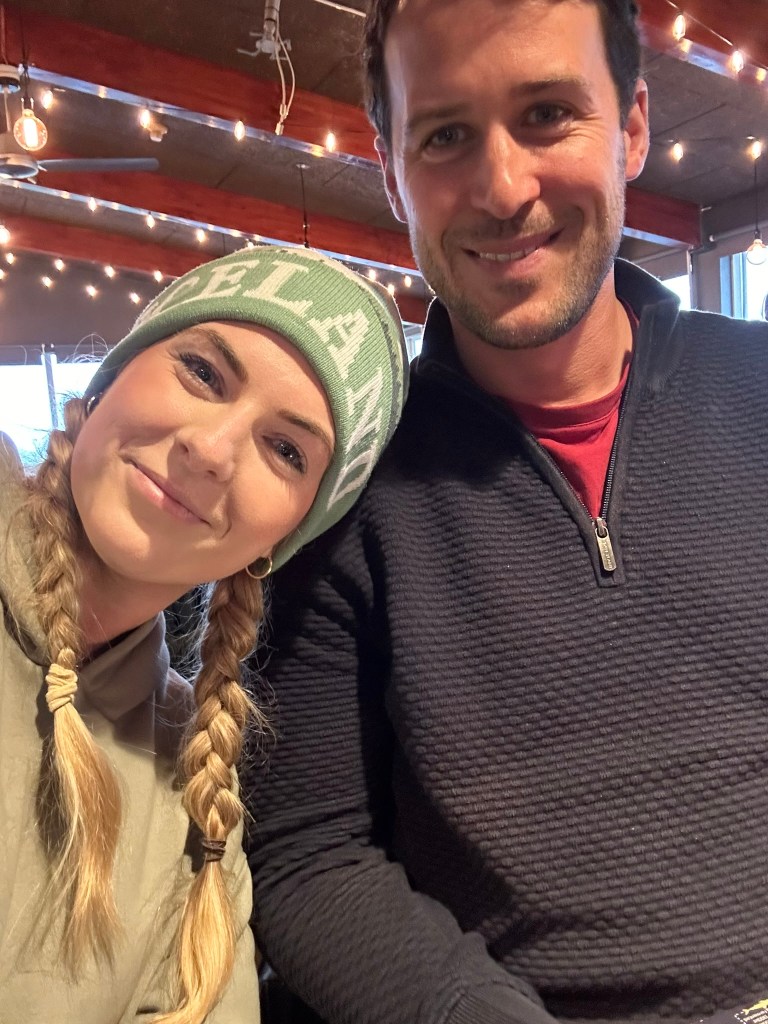
After a brilliant day exploring we finished up at Strondin Pub, with the delicious beer and wine going down a little too easily.
To hear more about our Iceland Road Trip, read on in Part 3.
Author: Kelly


 kirbtraveldiaries.com
Leave a comment