
Sligo is a vibrant town located on the wild west coast of Ireland. It has a fascinating history and features many stunning natural landmarks. Located on the western side of Sligo town is one of the areas most well known and iconic landformations, Knocknarea.

Knocknarea is a prominent mountain with a height of 327 metres above sea level. Featuring beautiful pine forests and steep but striking limestone cliffs, hikers who tackle the climb are rewarded with breathtaking views of Sligo bay, Coney Island, and the unique table top mountain of BenBulbin.
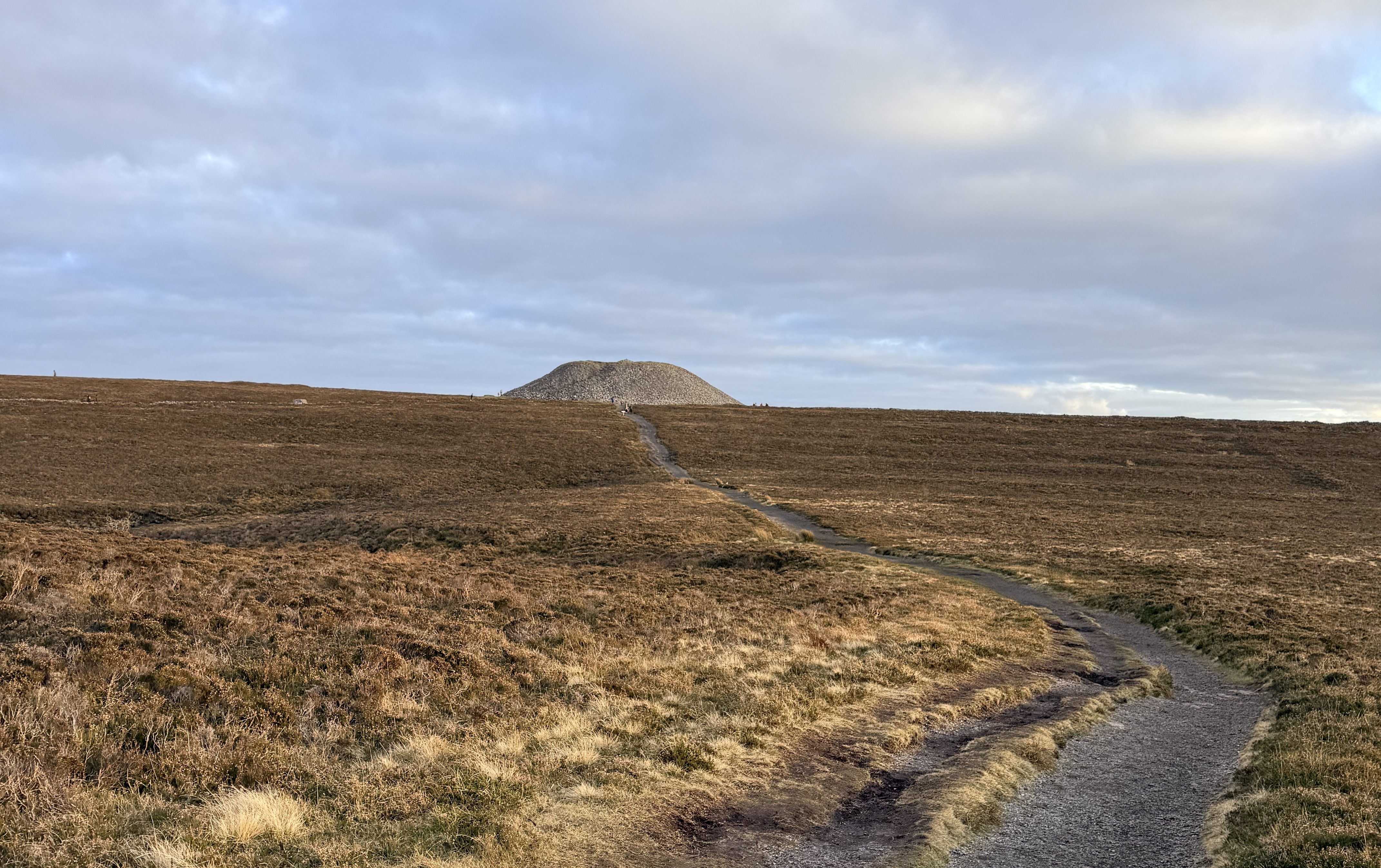
What may be less wellknown about Knocknarea is that the mountains summit is home to one of Ireland’s largest cairns. Overlooking the Atlantic Ocean, the carin is believed to be a 5,000 year old passage tomb, and the final resting place of Queen Maeve.
Who was Queen Maeve?
Queen Maeve’s Cairn, or Miosgán Meadhbha in Irish, is the final resting place of the legendary warrior queen of Caunnacht. Her story is a tale of power as she is most well known for stealing the brown bull of Cooley from Ulster in order to equal her husband, the kings, wealth and his white bull of Caunnacht. It is said that when Maeve died, she was laid to rest atop Knocknarea, standing upright, spear in hand, and facing her enemies in Ulster.
Today Queen Maeve’s ciarn is considered to be one of Ireland’s most imposing neolithic monuments, and the unopened/ unexcavated passage-tomb and is protected as a national monument. The cairn is approx. 60m wide, 10m high and is believe to contain more than 30,000 tonnes of stone. It is also flat topped with several kerbstones on the northern side.

Also on the summit of the mountain are the remains of 9 different monument tombs, which provide a reminder of the spiritual significance of this special site. Believed to date back to around 3,000 BCE, archaeologists suspect that the site is linked to the nearby passage-tombs of Carrowmore. All the monuments on Knocknarea seem to turn their back on the sea, instead facing into the centre of the peninsula where Carrowmore is located. This suggests a strong spiritual link between the individuals and communities burried across the area during this time.
Hiking up the Mountain
Taking approximately 2 hours to complete, Queen Maeve’s trail is a stunning hike taking you from the coastal town of Strandhill up to Knocknarea’s summit.
With the shortest trail 2.3km in length, the journey ascends 300m up the mountains northern edge through lush pine forests. Whilst the walk is steep, you can enjoy the gorgeous views of Sligo’s landscape, and say hi to some sheep or cows along the way. Even though trail is sturdy with gravel paths, timber steps and an elevated / stepped bog bridge, I would recommend taking water and stopping regularly to conserve energy.


At the summit you can walk around Queen Maeve’s tomb and read the many signs dedicated to the sites layout and history. You can also take in the stunning 360 degree panoramic views, so I would recommend visiting on a day with good visibility.


When visiting Sligo, hiking Knocknarea and visiting Queen Maeve is a must. Whether your after a good workout, breathtaking scenery or a peak into Ireland’s long history, there is something for everyone to enjoy. Each time I have done the hike, I have always been blown away by the ever changing landscape, the picturesque beauty of the west coast, and the mind bending depth of Irelands history.
There are several access points and trails across the mountain, I recommend visiting https://sligowalks.ie/walks/qmt/ to find which one works for you.


Leave a Reply